
Sciatica can cause sharp, burning or shooting pain that travels from the lower back through the buttock and down one leg, sometimes as far as the foot. It can also produce tingling, numbness or weakness in the leg, making walking, sitting, standing or sleeping uncomfortable or impossible.
Our expert physiotherapists at Gosforth Physio & Wellness specialise in the accurate diagnosis and effective treatment of sciatica. Through hands-on therapy, nerve mobilisation, exercise rehabilitation and evidence-based techniques, we help you recover quickly and reduce the risk of symptoms returning.
Newcastle Physiotherapy for Sciatica
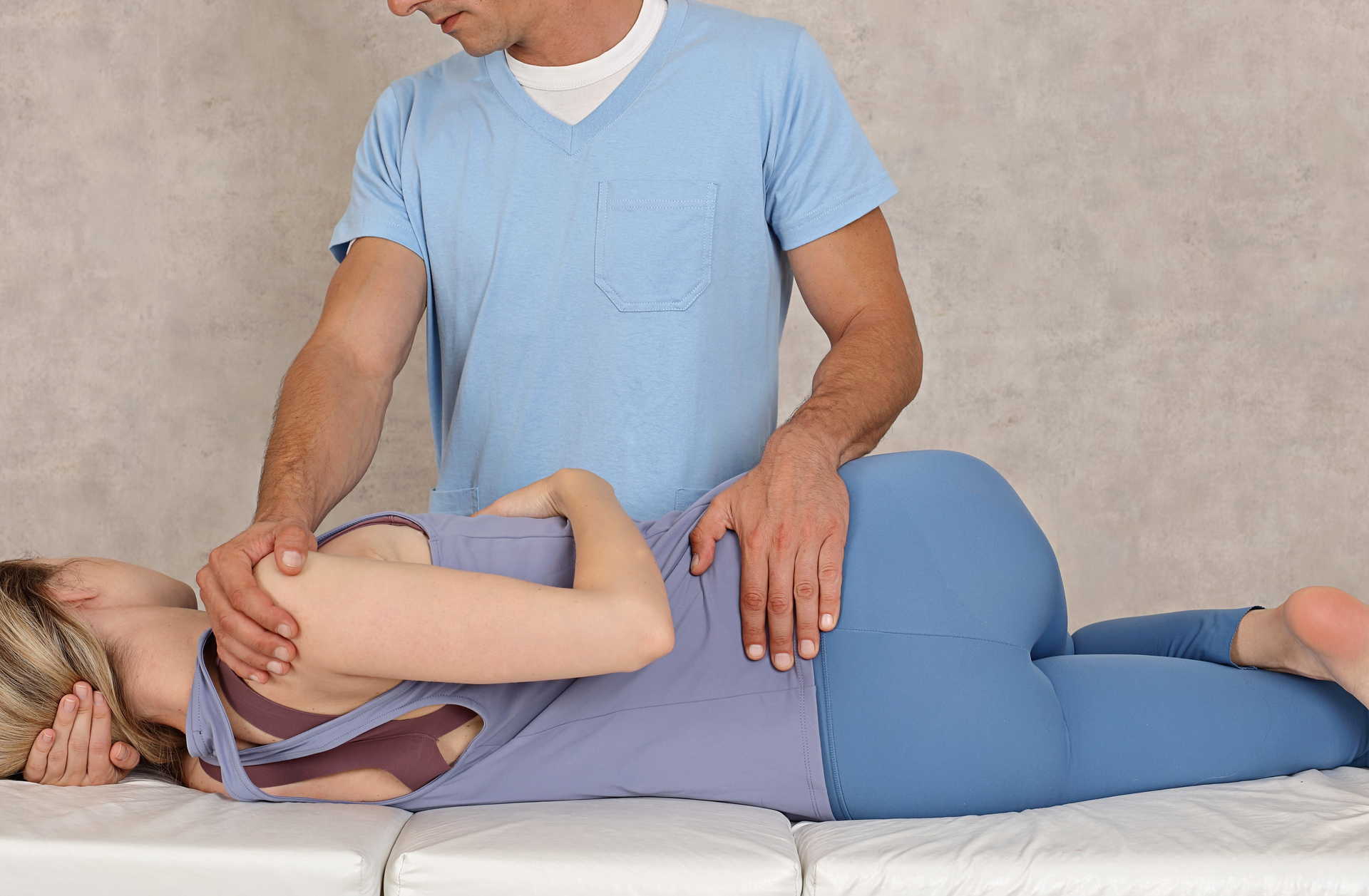
Our physiotherapists use a combination of nerve mobilisation, dry needling, manual therapy, soft tissue release and acupuncture to reduce pain, relieve nerve irritation and restore normal movement and function.
We focus on identifying the root cause of your sciatica rather than simply managing the symptoms. Following a full assessment and clear diagnosis, we discuss all appropriate treatment options and begin your physiotherapy in the very first session. When left unmanaged, sciatica can become chronic and more difficult to resolve. The sooner you seek help, the faster and more straightforward your recovery is likely to be.
What Causes Sciatica?
Sciatica is not a diagnosis in itself, but a description of symptoms caused by irritation or compression of the sciatic nerve. Identifying the underlying cause is essential to choosing the right treatment approach.
Disc Herniation
A bulging or herniated disc in the lumbar spine is one of the most common causes of sciatica. When disc material presses against the sciatic nerve root, it can produce referred pain, tingling or numbness that travels down the leg. Most cases respond well to physiotherapy without the need for surgery.
Lumbar Spinal Stenosis
Narrowing of the spinal canal can compress the nerve roots, causing sciatic symptoms that are often aggravated by standing or walking and relieved by sitting or bending forward.
Piriformis Syndrome
The piriformis muscle sits deep in the buttock and runs close to the sciatic nerve. If this muscle becomes tight or irritated, it can compress the nerve and produce symptoms that closely resemble disc-related sciatica. Accurate assessment is needed to distinguish between the two.
Facet Joint Irritation
Stiffness or inflammation in the small joints of the lumbar spine can irritate nearby nerve roots and contribute to sciatic symptoms, particularly in older adults or following periods of inactivity.
Spondylolisthesis
When one vertebra slips forward over another, it can narrow the space available for the nerve roots, causing compression and sciatic pain down the leg.
Dealing with pain shooting down your leg?
You're in the right place. Our physiotherapists assess, diagnose and treat sciatica every day. Get in touch to begin your recovery, or book online today.
Book in with our experienced physios, and take the first step towards pain-free movement.
We're rated 4.9 on Google
Speak to an Expert